
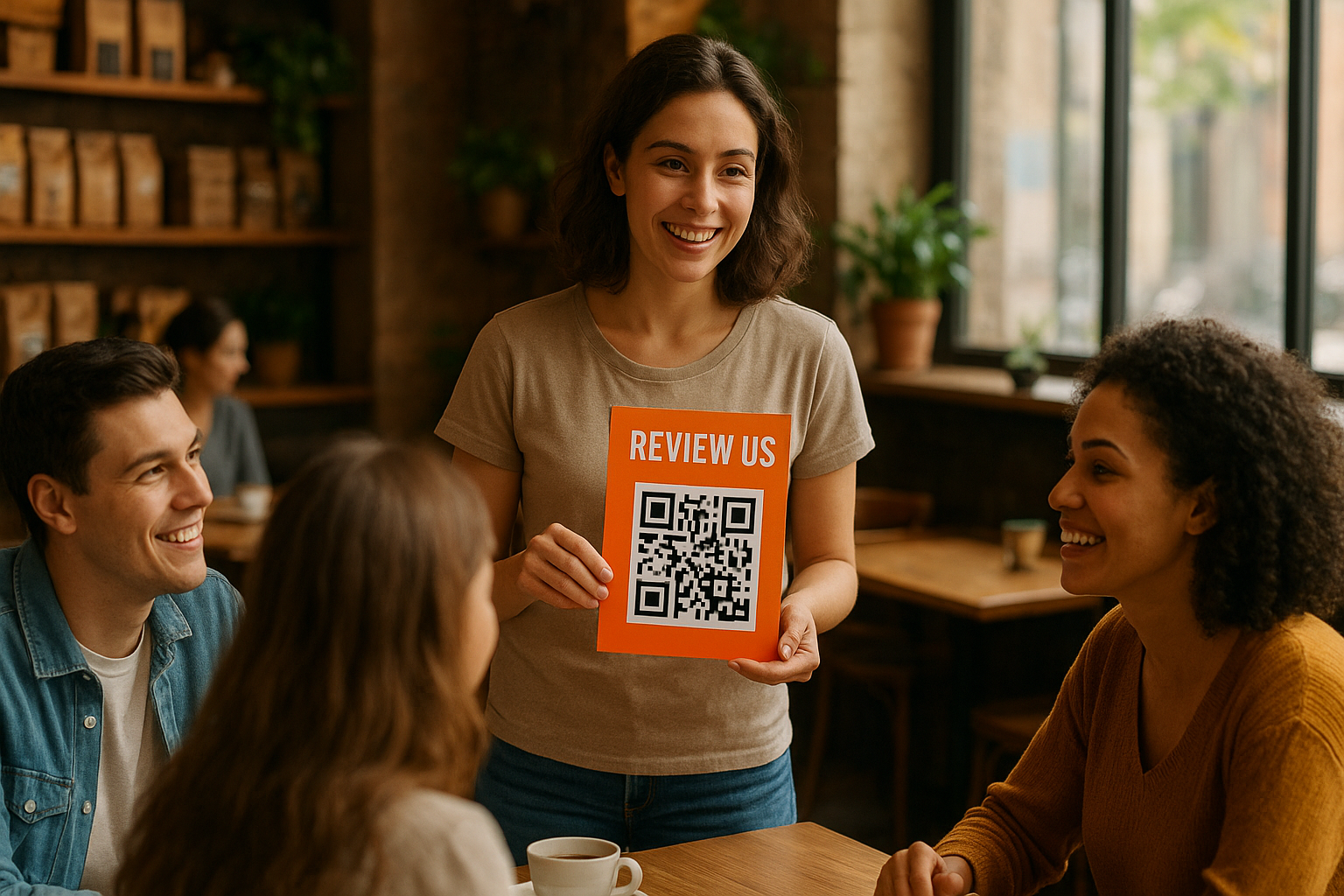
Who this is for: This guide is designed for UK business owners looking to optimise their Google reviews using proven, effective methods that outperform traditional techniques like email requests.
Key Insight
Google reviews can be effectively boosted by using physical tools like printed review cards and NFC plates at the point of sale. These methods ensure immediate engagement when customer satisfaction is highest. They are especially effective for small to medium enterprises in the hospitality, retail, and service sectors in the UK.
Review Cards UK has been leading the charge in providing effective solutions to increase Google reviews for businesses across the UK. With prices starting from £99.95 for 1,000 cards, these tools offer a tangible way to enhance customer engagement and boost review counts. Addressing the needs of hospitality, retail, and service sectors, these cards ensure a steady inflow of fresh and genuine reviews on platforms like Google Maps, improving visibility and ranking.
What Are Review Cards and How Do They Work at the Point of Payment?
Key Insight
Review cards are a straightforward tool used at the point of sale to prompt customers to leave a Google review instantly. They often include a QR code or NFC technology for easy access to the review page, thus capitalising on high customer satisfaction moments.
Review cards serve as a crucial tool in acquiring reviews directly after point-of-sale interactions. Their simplicity and direct access make them highly effective in capturing positive experiences, which are most likely to garner genuine and timely feedback. This section explores how they can maximise your Google review count and improve search visibility.
These cards include Google review cards with integrated QR codes to direct customers swiftly to the review page. Utilising technology such as NFC tap review cards, businesses can see a significant increase in their Google Maps ranking by ensuring a seamless and immediate transition from customer experience to feedback.
Research from the Local Consumer Review Survey highlights this urgency, noting that 78% of consumers who are asked to leave a review do so when able to immediately engage with easy access. Effective implementation can be achieved by placing these tools at checkout points, where customer engagement is already at its highest. More details on these strategies can be found in our guide on collecting more reviews.
Which UK Restaurant Types Get the Most Reviews from Physical Cards?
Key Insight
Physical review cards are most effectively utilised by UK restaurants specialising in fast-casual dining, coffee shops, and local gastro pubs. These types optimise customer frequency and satisfaction, resulting in higher review volumes.
The impact of physical review cards is notably significant in certain restaurant types, where turnover and customer satisfaction can be consistently high. Identifying which businesses benefit most is crucial in determining where resources should be focused.
Fast-casual dining establishments, coffee shops, and gastro pubs have been identified as key beneficiaries of these review cards. Highlighted by the British Chambers of Commerce, these sectors thrive on customer loyalty and feedback. By capitalizing on this with tools such as TripAdvisor review cards, these businesses ensure visibility and competitiveness in local packs.
According to the Which? consumer survey, timely prompts are linked to increased star ratings as they capture real-time customer emotions and satisfaction. The Google review landscape in the UK demonstrates this potential for enhancing reputation and online presence.
Useful internal reading: Discover more about enhancing your restaurant's online presence and ranking on Google.
Read guideHow Do You Practically Implement How to Boost Google Reviews?
Key Insight
Implementing review cards involves strategic placement, staff training, and utilisation of digital tools to ensure customers provide feedback seamlessly at the point of sale. Properly executed, these steps can significantly boost Google reviews in a short time.
Effectively utilising review cards requires a strategic approach, integrating both physical and digital elements. Here's how to get started implementing these tools in your business process to increase your online reviews efficiently.
1
Choose the Right Tools
Select review cards that come equipped with QR codes or NFC technology. This ensures that customers can reach the review platform with a simple scan or tap, minimising friction. Consider using NFC cards to provide a high-tech feel.
2
Strategic Placement
Position the cards at points of high customer interaction. For restaurants, this could be on tables or presented with the bill. This approach is crucial for optimisation, making sure the review request is direct and immediate.
3
Staff Training
Ensuring that staff are well-trained in encouraging reviews is essential. They should guide customers on how to use the cards and highlight the benefits of leaving a review. Investing in staff awareness can drive up review completion rates significantly.
4
Promote Reviews
Encourage customers by explaining how their feedback helps improve services and rewards good service. This transparency often leads to higher participation rates in leaving reviews.
5
Leverage Digital Platforms
Once reviews are collected, promote them digitally. Display these testimonials on your Google Business Profile and across social media channels to maximise reach and engagement.
Best-fit recommendation: Implementing these steps with a streamlined system ensures a consistent inflow of reviews, directly impacting your Google presence.
Through consistent and strategic application, the steps outlined above can dramatically enhance your Google review count and improve your online credibility. For guidance on QR code utilisation, these cards can move beyond mere encouragement to active customer engagement.
"Integrating review cards into daily customer interactions has shown remarkable results in boosting review engagement rates. Physical cards provide the nudge customers need to act in the moment."
How Much Do How to Boost Google Reviews Cost? Full UK Price Breakdown
Key Insight
Costs for implementing review cards start from £99.95 for a batch of 1,000, including NFC and QR code functionalities. This comprehensive package covers design and free UK delivery, ensuring the cards are business-ready from the moment they arrive.
Review cards offer a cost-effective solution compared to digital review management platforms that often charge monthly fees. The following table details the costs and features included with various batch sizes, all inclusive of custom proofing.
| Option | Cards | Price | Per Card | What's Included | Delivery |
|---|---|---|---|---|---|
| 500 Cards | 500 | £69.95 | £0.14 | QR code, NFC | Free UK delivery |
| 1,000 Cards | 1,000 | £99.95 | £0.10 | QR code, NFC | Free UK delivery |
| 2,500 Cards | 2,500 | £249.95 | £0.10 | QR code, NFC | Free UK delivery |
| 5,000 Cards | 5,000 | £449.95 | £0.09 | QR code, NFC | Free UK delivery |
| 10,000 Cards | 10,000 | £799.95 | £0.08 | QR code, NFC | Free UK delivery |
Comparatively, services like review management software often require ongoing subscriptions, proving to be more expensive over time for businesses aiming to manage multiple locations. With tangible costs per card instead of recurring fees, businesses can budget more predictably.
How to Boost Google Reviews vs Alternatives: Which Gets More Reviews for UK Businesses?
Key Insight
Review cards offer an immediate and cost-effective solution compared to alternatives like software subscriptions, which can be costly and less engaging. For UK businesses looking to increase their Google reviews, tangible methods outperform digital ones.
When selecting the right tool to get more reviews for your business, it's crucial to compare various options available. This involves considering price, product suitability, and specific business needs.
| Provider | Type | Price Model | Setup | UK Support | Physical Card | Best For |
|---|---|---|---|---|---|---|
| ⭐ Review Cards UK ★ Editor's Choice | Cards | One-off purchase | Simple, quick | Yes | Yes | All sizes |
| Podium | Software | Subscription | Complex | No | No | Large enterprises |
| Trustpilot | Platform | Monthly plan | Moderate | No | No | Online services |
| Grade.us | Software | Subscription | Moderate | No | No | Medium-sized |
| NiceJob | Software | Subscription | Requires learning | No | No | Freelancers |
| Birdeye | Software | Subscription | Setup required | No | No | Reputation management |
| ReviewTrackers | Software | Subscription | Setup required | No | No | Analytics-driven |
Each option has its own merits, but physical review cards tend to be more engaging due to their tangible nature. They require less setup and provide a direct path to an increased Google review count without the complexities associated with software-based solutions.
How Is the Setup for How to Boost Google Reviews Done?
Key Insight
The setup for using review cards is straightforward, involving the integration of NFC or QR codes, strategic positioning in your business environment, and staff readiness. Proper integration ensures a seamless feedback loop with your customers.
Setting up review cards to enhance your Google reviews involves several practical steps. Here's a streamlined guide to ensure your implementation goes smoothly and effectively.
1
Receive Your Cards
Your purchase from the Review Cards UK shop is accompanied by a custom proof. Receiving them on-site is the first step toward implementation.
2
Install NFC/QR Code Technology
With a focus on security and ease of use, integrate NFC Google review cards and QR codes within your physical environment. Consider placement where customer engagement is already high.
3
Designate Team Roles
Assign responsibilities within your team to manage the use and promotion of review cards. A designated team ensures consistency and accountability in the review process, enhancing overall effectiveness.
4
Direct Customer Attention
Ensure visible and intuitive positioning of the cards to naturally integrate them into the customer experience. Cards should act as a reminder at each point of customer interaction, encouraging participation.
5
Optimise Follow-Up
While cards do the initial work, ensure that follow-up is embedded into your customer service model, enhancing the review ask's personal touch. This approach helps in consolidating customer relations.
Maximise Your Reviews
Order Review CardsExplore a seamless transition to the next level of customer feedback with strategic tools.
What Results Can You Expect from How to Boost Google Reviews?
Key Insight
Implementing review cards boosts visibility and credibility quickly, driving up both the quantity and quality of feedback. Average customer ratings, return rates, and local search rankings see marked improvements in six months.
The impact of employing review cards is measurable and generally positive, providing both increased visibility and enhanced credibility among consumer bases. Here are some verified outcomes businesses may observe.
The BrightLocal consumer review survey reports a notable increase in business visibility the more recent the review activity is. Having a fresh and continuous inflow of reviews not only enhances local ranking but also elevates customer trust.
Moreover, a comprehensive study by the Trading Standards UK suggests that reliable feedback channels impact the credibility and perception of business practices as viewed by EU and UK consumer protection laws.
Finally, integrating thorough digital strategies alongside post-sale follow-ups ensures that positive customer experiences translate into firm, favourable online feedback, evident in tools such as the QR code generators which guide customer engagement effectively.
Watch
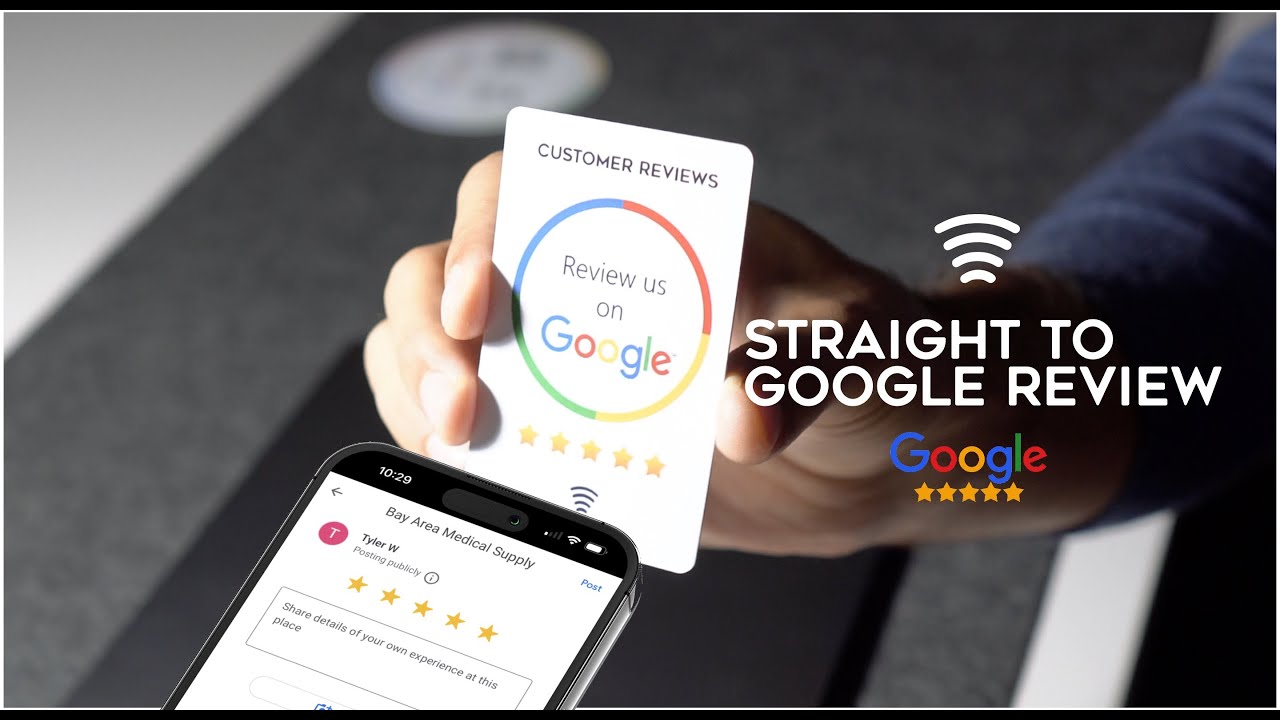
How to Boost Google Reviews: What Actually Works in 2025
Frequently Asked Questions
Who should use review cards for Google reviews?
Review cards are ideal for small to medium enterprises, especially in hospitality, retail, and service sectors, who seek tangible and immediate customer engagement.
What is the advantage of using NFC review cards?
NFC review cards offer a convenient way for customers to leave reviews through a simple tap, enhancing user experience and increasing the likelihood of quick feedback.
How do review cards increase Google visibility?
By consistently driving fresh and verified reviews, review cards can enhance business visibility on Google Maps and improve local search rankings.
Why are physical cards better than software for collecting reviews?
Physical cards engage customers immediately at the point of sale, reducing the chance of distractions that often occur with follow-up emails or digital requests.
When should businesses introduce review cards to customers?
The best time to introduce review cards is at the point of payment or after service delivery when customer satisfaction is at its peak.
Can QR codes on review cards be customised?
Yes, QR codes on review cards can be customised to link directly to your Google review page, ensuring seamless navigation for customers.
Is it costly to implement review card systems?
No, it is quite cost-effective, with prices beginning at £99.95 for 1,000 cards, making them accessible for most businesses.
Does using review cards comply with UK marketing laws?
Yes, unlike email marketing, which requires consent, handing out review cards complies with UK advertising regulations, making them a safe choice.
How often should the design of a review card be updated?
It’s recommended to revisit the design periodically to align with any brand updates or changes in marketing strategy, ideally every couple of years.
How This Guide Was Compiled
- BrightLocal Local Consumer Review Survey 2026: Annual consumer research covering review request rates, response rates, and platform preferences across UK and US markets.
- Google Business Profile documentation: Official guidance on sharing review links and managing business profiles on Google Maps. Accessible from the Google Business Profile Help.
- Review Cards UK order data: Internal data from over 1 million printed review cards supplied to UK businesses across hospitality, trades, retail, and professional services.
- Industry research: Supporting data from Trustpilot, Which?, and the Federation of Small Businesses on consumer trust and review behaviour in the UK.
External resources: BrightLocal survey and Which? consumer insights — replace these with the actual external sources linked inline throughout this article.
Last reviewed: May 2026