
So, you’re wondering how people find out what others think about your business online? It often starts with a simple search. When someone types your business name into Google, what pops up can really make a difference. This article is all about how that ‘google reviews search by name’ works and how you can use it to your advantage, whether you’re a customer looking for a service or a business owner wanting to know what’s being said. It’s not as complicated as it sounds, honestly.
In today’s world, your online reputation is pretty much your shop window. For businesses here in the UK, Google reviews are a massive part of that. Think about it: when you’re looking for a new cafe, a reliable plumber, or a decent solicitor, where do you usually start? Most likely, you’ll type the service into Google and see what pops up. And what’s often right there, alongside the business name and address, are those star ratings and customer comments. These reviews aren’t just nice-to-haves; they’re powerful indicators of trust and quality for potential customers. Google’s algorithms also use reviews as a signal, meaning businesses with more positive feedback tend to rank higher in local search results. This is especially true for the ‘Google 3-pack’ and map listings, which are often the first things people see. So, a strong review profile can directly lead to more visibility and, ultimately, more customers. Google reviews are crucial for UK businesses to build trust and influence customer decisions.
Social proof is a big deal these days. Nearly 9 out of 10 shoppers trust online reviews as much as a personal recommendation from a friend or family member. Almost 90% will read online reviews before visiting a business or buying a product. Good reviews build trust, and customers are likely to spend 31% more on a business with the best reviews. It’s proof that you’re a legitimate business with real customers who have taken the time to share their experience. They provide insight into your business from a customer’s standpoint so that others can decide if you’re suited for their needs.
When people search for local services, they often look at Google first. The ‘Google 3-pack’ and map results are usually the first things they see. Having your business in the top three, even for just one search term, is vital. While many factors determine where your page ranks, after directory citations, 5-star reviews are right up there in importance. Google likes to reward businesses that have local interaction, and reviews are a great way to prove this. For example, a local bakery in Bristol might find that by encouraging customers to leave reviews, they appear higher in searches for "best cakes Bristol", leading to more footfall.
It’s easy to think that reviews are just for customers to read, but they’re also a direct line to understanding what you’re doing well and where you could improve. Businesses that actively monitor and respond to reviews are often the ones that see the biggest improvements.
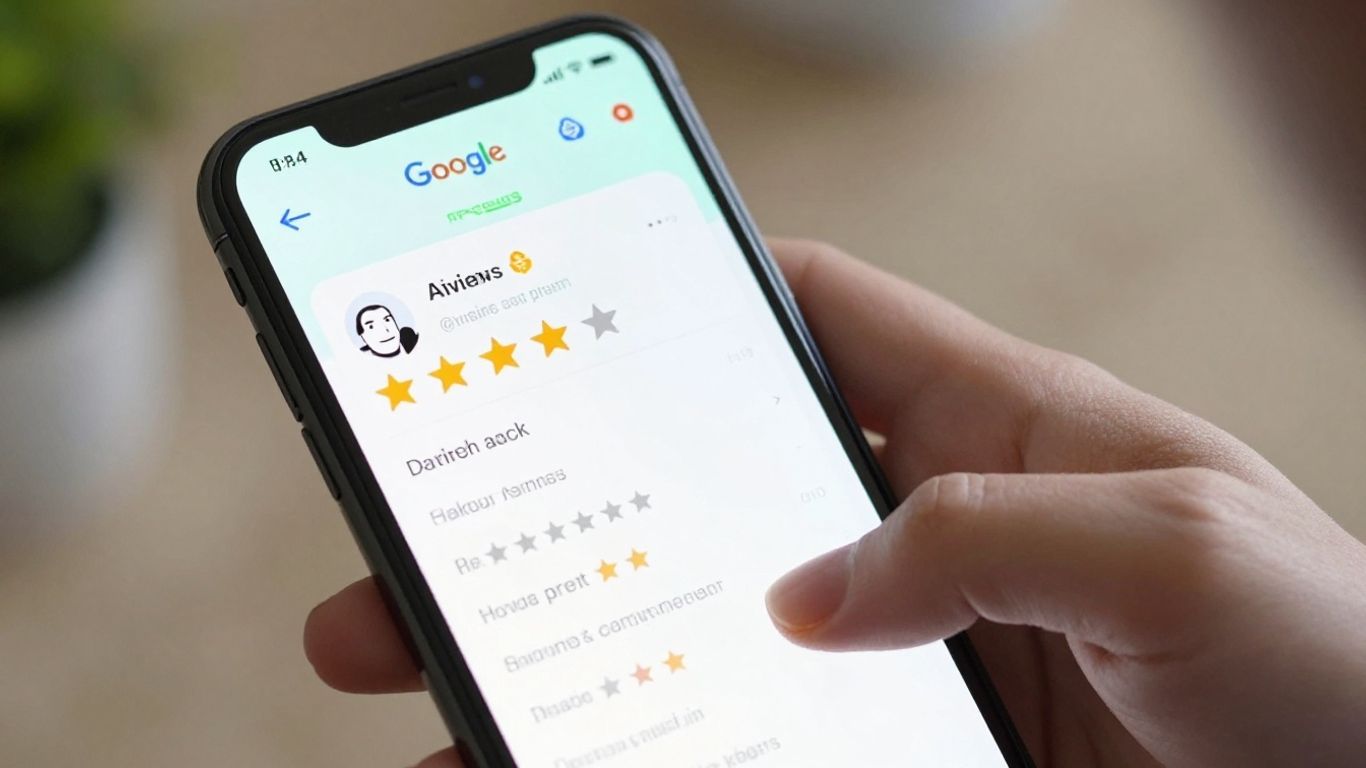
It’s pretty straightforward to see what people are saying about your business on Google. You just need to log into your Google Business Profile account. Once you’re in, find your business listing and then head over to the ‘Reviews’ section, which is usually on the left-hand side. This is where all your reviews live, good and bad. It’s the central hub for all customer feedback on Google, so getting familiar with it is key. You can also find your reviews directly on Google Maps by searching for your business. This is your direct line to understanding customer sentiment. For a step-by-step guide on how to perform a google reviews search by name, check out this resource how to perform Google Reviews Search by Name.
Sometimes, you might find reviews that just aren’t fair or accurate. Google has a system for this. If you see a review that breaks their guidelines – perhaps it’s spam, off-topic, or contains offensive language – you can flag it. To do this, simply find the review on your Google Business Profile, hover over it, and you should see a flag icon appear. Click this to ‘Flag as inappropriate’ and notify Google. While Google will review it, it’s worth remembering that they usually take a few days to act. It’s also important to note that you can no longer contact Google directly for these issues; instead, you’ll need to use the forums for further information.
Keeping an eye on what’s being said about your business is more than just checking your Google reviews. You should also be aware of feedback on other platforms like TripAdvisor or Trustpilot. Setting up alerts can be a real help, notifying you as soon as a new review comes in. This allows for timely responses, which we know is important. For example, a small independent bookshop in York noticed a pattern of comments on TripAdvisor mentioning their cosy reading nooks. By actively promoting this feature in their marketing, they saw an increase in customers specifically asking for those spots, directly translating into more footfall and sales. This shows how monitoring different platforms can give you unique insights.
It’s easy to move on and assume everything’s taken care of but it’s always worth double checking… did the review get flagged, did you rectify the customer’s complaint and live up to your promises? Always worth checking!
Here’s a quick look at how different businesses have benefited from making review collection easier:
These real-world examples highlight how making the review process easier for customers directly translates into stronger local visibility and trust. A consistent flow of recent reviews is a key signal to Google that your business is active and engaged, which can help your Google Business Profile insights improve. Remember, a strong star rating and a steady stream of feedback are vital for ranking higher on Google [e891].
So, you’ve got a handle on finding and responding to reviews. Brilliant. But what do you actually do with all that feedback? It’s not just about collecting stars; it’s about understanding what makes your customers tick and using that knowledge to make your business even better. Think of reviews as a direct line to your customers’ thoughts – a goldmine of information if you know where to look.
This is where you move beyond just seeing individual comments and start spotting patterns. Are people consistently raving about your speedy service? Or perhaps there’s a recurring mention of a particular dish on your menu being a hit? These are clues. On the flip side, if multiple reviews mention a long wait time or a confusing booking process, that’s a clear signal for where improvements are needed. It’s about looking at the collective voice of your customers to identify strengths and weaknesses.
For example, a small independent bookshop in York noticed a trend in their Google reviews: customers loved the cosy atmosphere and the helpful staff, but many mentioned they struggled to find specific titles. By analysing these comments, the shop realised they needed to improve their in-store signage and perhaps invest in a better stock-checking system. This wasn’t something they might have picked up on without paying attention to the analytics within their reviews.
Every review, good or bad, is a piece of customer intelligence. It tells you what you’re doing right and where you might be falling short. This creates a vital feedback loop. When you act on this feedback – perhaps by tweaking a service or improving a product – and then see those improvements reflected in future reviews, you’ve successfully used customer intelligence to drive positive change. This ongoing cycle is how businesses truly grow and adapt.
Consider a local bakery in Manchester that started using QR code review cards. They noticed a surge in feedback mentioning their new vegan pastry range. This direct insight allowed them to confidently expand their vegan offerings, knowing there was a clear customer demand. This is a perfect example of how making it easier for customers to share their thoughts directly informs business decisions and builds customer trust.
This is the payoff. You’ve gathered the data, you’ve understood the patterns, and now it’s time to act. This might involve staff training, updating your website, changing a product, or even just refining your customer service approach. The key is to make these changes concrete and measurable. Don’t just say you’ll
It might seem obvious, but the more positive reviews your business has, the more Google tends to notice. Think of it as a digital thumbs-up. Google wants to show people the best, most trustworthy places, and a steady stream of good feedback is a big signal that you’re doing things right. This can really help your business climb the rankings, especially in that ‘Local 3-Pack’ that pops up for many searches. For example, a local bakery in York found that actively encouraging reviews helped them appear higher when someone searched for ‘best cakes York’, leading to more people popping in.
Google uses reviews as a significant factor when deciding which businesses to show in local search results. It’s not just about having a listing; it’s about having a prominent one. The quantity, quality, and recency of reviews all play a part. When someone searches for your business by name, seeing a strong star rating and plenty of positive comments builds immediate trust. This can directly influence whether a potential customer chooses you over a competitor. It’s a direct link between customer satisfaction and online discoverability. Google reviews are a key part of this local SEO puzzle.
Your star rating is often the first thing people see. A high average star rating acts as a quick indicator of quality and customer satisfaction. It’s a simple, visual cue that reassures potential customers. Imagine searching for a cafe and seeing one with 4.8 stars and another with 3.2 – most people will instinctively click on the higher-rated one. This is why actively collecting reviews is so important; it helps maintain and improve that all-important star rating.
Getting customers to leave reviews doesn’t always happen naturally. Many businesses find that a simple, polite request at the right moment – perhaps after a particularly good service – makes a big difference. Making the process as easy as possible is key. This is where tools like QR and NFC review cards come into play.
For instance, a small independent bookshop in Edinburgh started using review cards with QR codes. Customers could simply scan the card with their phone, tap the link, and leave a review instantly. They found this dramatically increased their review count. Similarly, a popular fish and chip shop in Cornwall noticed a significant uptick in feedback after placing small, well-designed cards on tables.
These methods simplify the customer journey, turning a potentially forgotten task into a quick, easy action. This consistent effort helps build a strong online reputation and makes your business more appealing than competitors. Collecting Google reviews this way is a smart move for any UK business.
Making it easy for happy customers to share their positive experiences is one of the most effective ways to build trust and improve your online visibility. It’s about removing any friction from the process, so that positive word-of-mouth can be captured and amplified online.
By making it effortless for satisfied customers to leave feedback, you not only gather valuable insights but also significantly boost your business’s online presence. This proactive approach to review collection is a powerful strategy for attracting more customers and building a stronger local reputation.
Getting customers to leave reviews shouldn’t feel like a chore for them, or for you. In today’s busy world, making things simple is key. If a customer has had a great experience, they might be happy to share, but they’re often not going to go out of their way to search for your business on Google and leave a review. We need to make it as easy as possible for them.
Think about how often you’ve been asked for a review. Sometimes it’s a long email with a complicated link, or you’re expected to remember the business name and find it yourself. This is where review cards, especially those with QR codes or NFC (Near Field Communication) technology, come into their own. These little cards are like a direct express lane to your review profile. A customer can simply scan the QR code with their phone, or tap an NFC card, and be taken straight to the page where they can leave feedback. It cuts out all the searching and guesswork.
For example, a popular independent bookshop in Edinburgh found that handing out small, nicely designed cards with a QR code at the till dramatically increased their Google reviews. Customers could scan the card while waiting for their change or on their commute home. Similarly, a local artisan bakery in Bristol noticed a significant uptick in TripAdvisor reviews after they started including NFC-enabled cards with their takeaway orders. This simple step transformed a passive customer into an active reviewer.
Making the review process effortless is all about fitting it into the existing customer journey. It’s about being present at the right moment, with the right tool. This could be:
It’s not just about Google, either. These cards can be tailored to link to other platforms like Trustpilot or TripAdvisor, giving customers options and consolidating your online presence. A small cafe in Manchester found that by having QR codes on their menus that linked directly to their Google review page, they saw a 20% increase in reviews within a month. It’s about removing friction at every step.
This isn’t an add-on; it’s part of the service. Train your staff to mention the review cards briefly and politely. It doesn’t need to be a hard sell. A simple, "We’d love to hear about your experience, please feel free to leave us a review on Google using this card," is often enough. The key is consistency and making it a natural part of the interaction. For businesses that rely on local discovery, like a local plumber or an estate agent, making it easy for satisfied customers to share their positive experiences can directly influence local search rankings and build crucial trust with potential new clients.
So, you’ve got reviews coming in – brilliant! Now, what do you do with them? It’s not just about collecting stars; it’s about the conversation. How you talk back to your customers, both happy and not-so-happy, says a lot about your business.
When someone takes the time to say something nice about your business, a simple ‘thank you’ goes a long way. It shows you’re paying attention and that you appreciate their custom. Think of it as a little nod to say, "We saw your kind words, and we’re chuffed!". This not only makes the reviewer feel good but also shows potential customers that you’re a business that values feedback. A quick, personal reply can make all the difference.
For example, ‘The Little Bookshop’ in Bath always replies to their positive reviews. If someone mentions enjoying a specific book recommendation, they’ll often reply with something like, "So glad you enjoyed that recommendation, Sarah! We love helping people find their next favourite read." It’s these small touches that build loyalty.
Right, the tricky bit. A negative review can sting, but it’s also a golden opportunity. Ignoring it is the worst thing you can do. Instead, see it as a chance to show how you handle problems. A calm, polite, and helpful response can often turn a bad situation around.
Here’s a good way to approach it:
Consider ‘The Cornish Bakery’ in St Ives. They had a review mentioning a pastry wasn’t fresh. Their response was, "We’re very sorry to hear about your experience with our pasty. That’s certainly not the standard we aim for. Please could you get in touch with our manager at [email address] so we can look into this for you?" This shows they’re taking it seriously and want to fix it.
It’s easy to get defensive when reading criticism, but remember that your response is public. Potential customers will see how you handle complaints just as much as they’ll see the complaint itself. A professional and empathetic reply builds more trust than a perfect review score ever could.
Every interaction, good or bad, is a chance to build trust. When you respond to reviews, you’re not just talking to the person who left it; you’re talking to everyone who might read it. Consistent, thoughtful engagement shows that you care about your customers and are committed to providing a good service. It’s this ongoing dialogue that strengthens your online reputation and encourages people to choose your business. Making it easy for customers to leave reviews, perhaps with a simple QR code on review cards, means you’re more likely to get that initial feedback to respond to in the first place.
Remember, your replies are a reflection of your business. Keep them genuine, helpful, and professional, and you’ll be well on your way to building a strong, trustworthy online presence. Responding to Google reviews effectively is a skill that pays dividends.
When customers share their thoughts, it’s a great chance to show you care. Listening to feedback helps you make things even better. We love hearing from you, so please share your experiences. Visit our website to see how we use your input to improve.
So, there you have it. Using Google Reviews Search by Name might seem a bit fiddly at first, but once you get the hang of it, it’s a really handy way to see what people are saying about businesses. It’s not just about finding out if that new cafe is any good, either. For businesses, it’s a direct line to customer feedback, helping you see what you’re doing right and where you could maybe do a bit better. Keep an eye on those reviews, and you’ll be well on your way to looking good online.
It’s a way to find out what people are saying about businesses online. When you search for a business by its name on Google, you can often see reviews left by customers. This helps you understand what others think about their products or services before you decide to use them yourself.
Google reviews are like digital word-of-mouth for your business. When people search for services or online, they often look at reviews to decide where to go. Having good reviews can make your business look more trustworthy and encourage new customers to choose you.
You can easily see your reviews by logging into your Google Business Profile. Once you’re there, find the ‘Reviews’ section. You can also search for your business on Google Maps, and your reviews will appear with your listing.
If you find a review that breaks Google’s rules, you can flag it. Go to the review, and you should see an option to ‘Flag as inappropriate’. Google will then look into it. It’s important to remember that resolving genuine customer complaints is also key.
Review Cards, especially those with QR codes or NFC, make it super easy for happy customers to leave a review in seconds. This means you can collect more positive feedback without customers having to search for your business online, helping to boost your online reputation quickly.
Google uses reviews as a sign of a business’s quality and trustworthiness. Having more positive reviews can help your business show up higher in local search results, like in the ‘Google 3-pack’. This makes it easier for new customers to find you.